
Most electric bikes in the UK weigh between about 15 kg and 35 kg, depending on style. Commuter and city models usually fall around 18–25 kg. Weight matters most when you lift, carry or store the bike. While you ride, motor assistance does most of the work.
E-Movement has been helping riders across the UK since 2018, and e-bike weight is one of the first things customers ask about. This guide covers what drives the number, what UK law says about it, how different styles compare and how to choose the right weight for your life.
How Much Does an Electric Bike Weigh on Average?
A typical bicycle weighs around 10–14 kg. An e-bike adds a motor and battery and usually has a stronger frame, so most e-bikes are several kilograms heavier. However, two bikes of the same style can still differ in weight.
What Makes an E-Bike Heavy?
Four components account for most of the total:
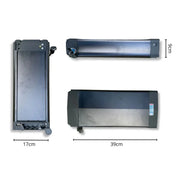
- Battery: A higher-capacity battery gives more range but adds weight.
- Motor: Both rear hub motors and mid-drive motors add weight, depending on where they are placed.
- Frame: Aluminium is lighter, steel is durable but heavy, and step-through frames are also relatively heavy.
- Components: Suspension, tyres, mudguards, racks and lights all add weight.
Once you know what adds the weight, the typical ranges for each bike style make more sense.
Typical Weight Ranges for Different Styles
Let's explore typical e-bike weights by type, with examples from E-Movement.
City and Folding E-Bikes
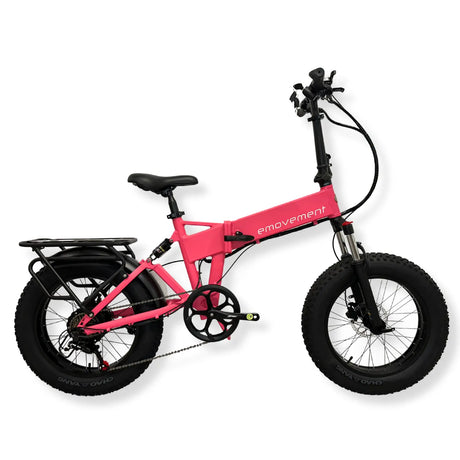
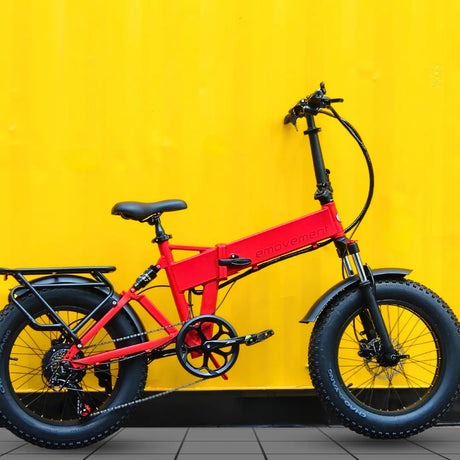
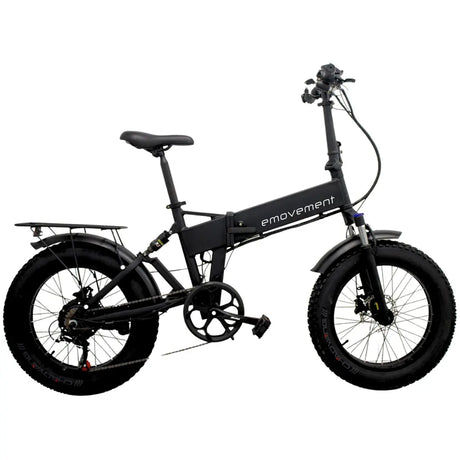
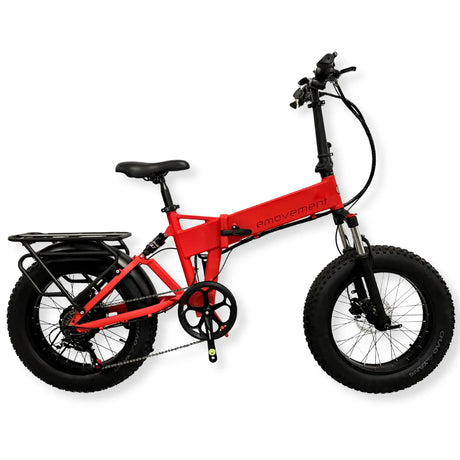
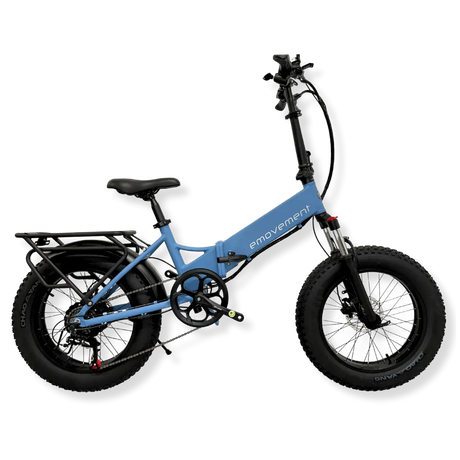
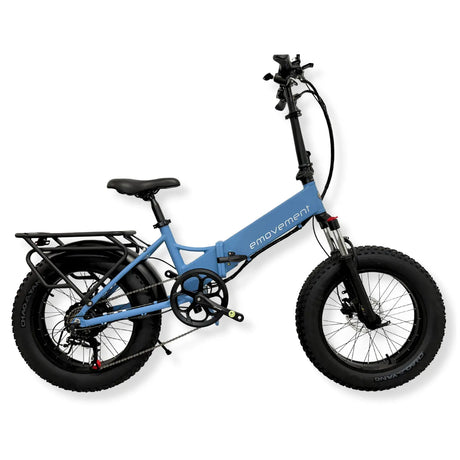
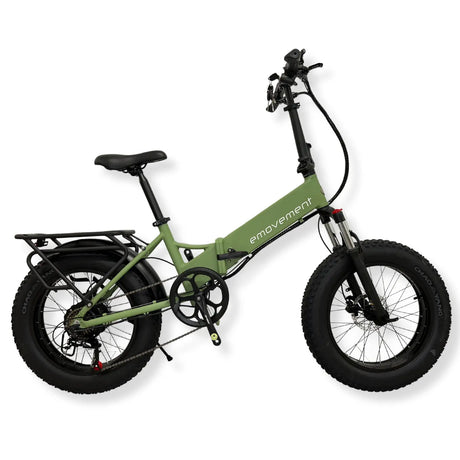
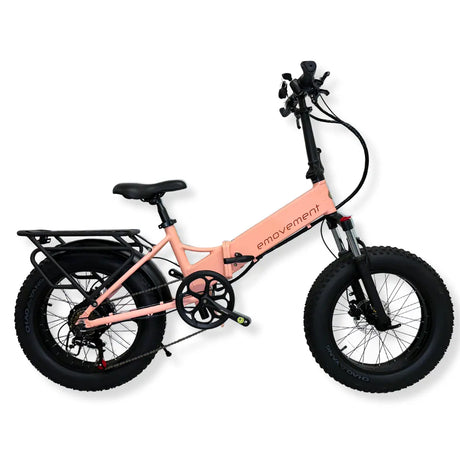
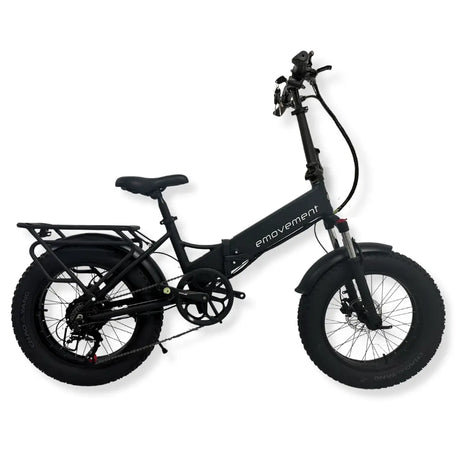
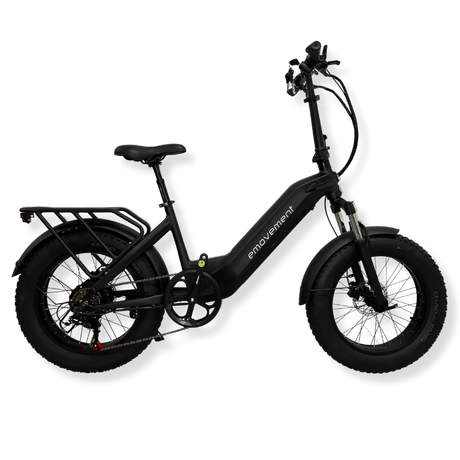
- Lightweight folding e-bikes: These can weigh about 16–19 kg and are easy to lift, transport and store. The E-Movement Pixie weighs 22 kg and combines a folding frame with fat tyres and a step-through design.
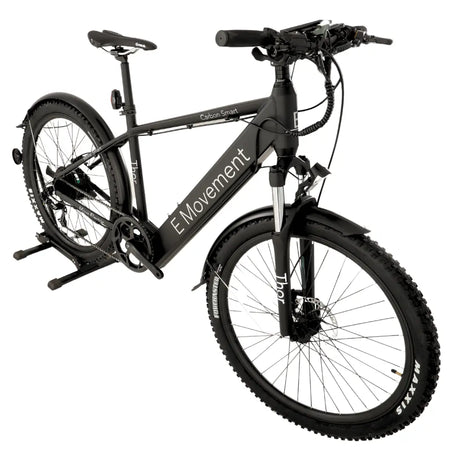
- Step-through city e-bikes: These usually weigh 20–26 kg and come with features such as mudguards, lights and a rear rack. The E-Movement Troy Pro weighs 22 kg and has a comfortable commuting design.
Mountain and Fat-Tyre E-Bikes
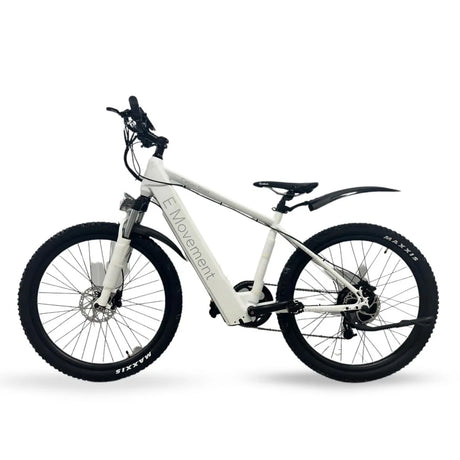
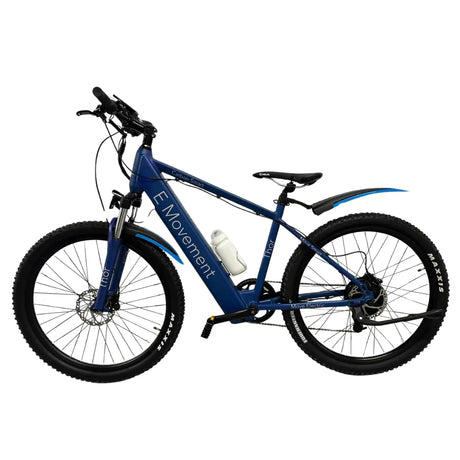
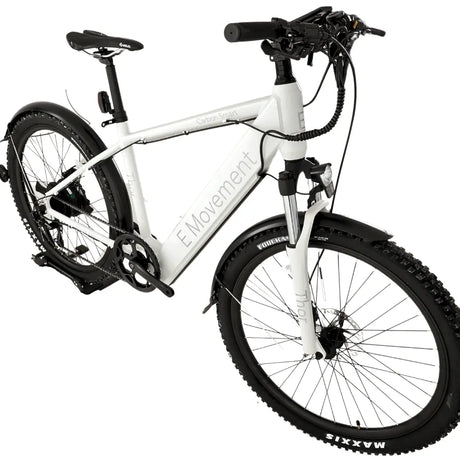
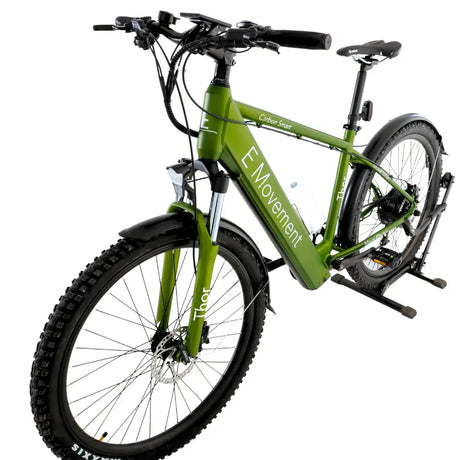
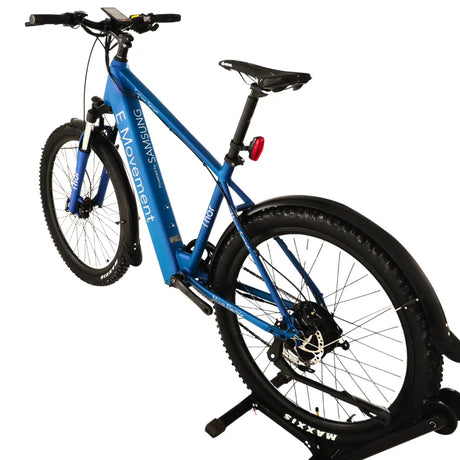
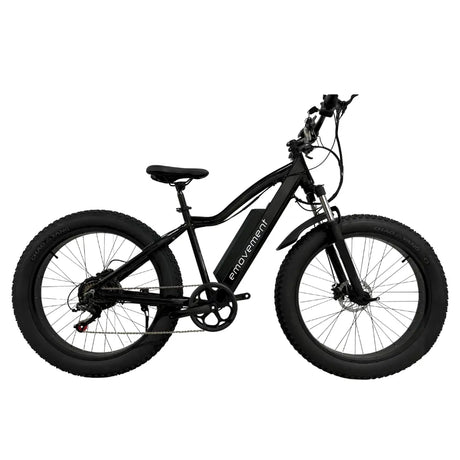
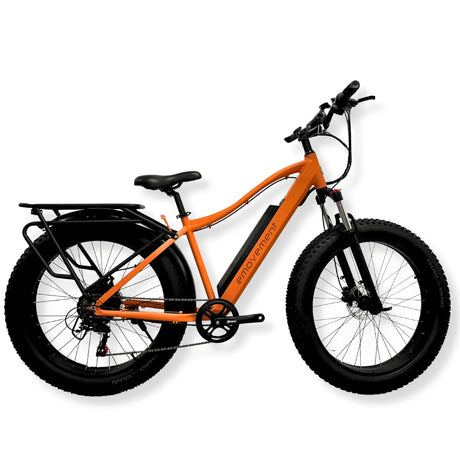
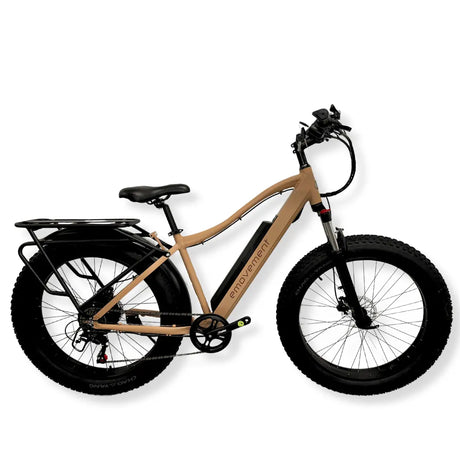
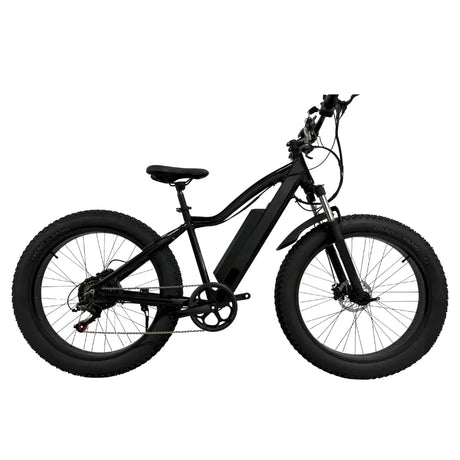
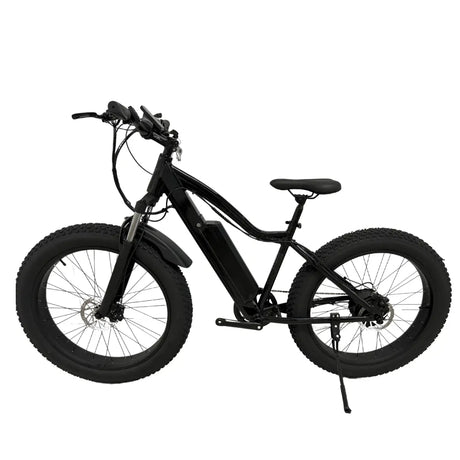
- Electric mountain bikes (eMTBs): These usually weigh 24–28 kg, with a sturdy frame, suspension and chunky tyres. The E-Movement Thunder V4.2 weighs 22.5 kg and features a hardtail fat-tyre design.
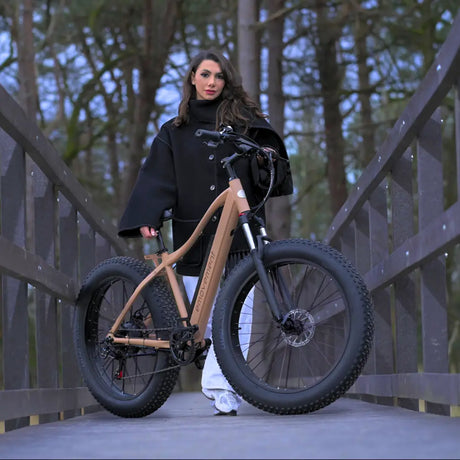
- Fat-tyre e-bikes: These often weigh 28–35 kg or more. They give extra grip on sand, mud and other difficult surfaces, but they are harder to pedal without assistance and to transport. The E-Movement Raven weighs approximately 25 kg, including its 5 kg battery.
Not sure which style fits your routine? Get in touch with us and we'll help you narrow it down.
UK Law and Electric Bike Weight
There is no legal maximum weight for an ordinary e-bike in the UK. However, there are rules on power and speed that decide whether a bike counts as an electrically assisted pedal cycle (EAPC). An e-bike that meets the following criteria can be ridden like any other bicycle:
- The motor's continuous rated power must not exceed 250W.
- Assistance must cut out at 15.5mph (25km/h).
- The rider must be at least 14 years old.
A compliant EAPC does not need a licence, tax, insurance or registration. Bikes that go beyond these limits are treated as mopeds or motorcycles. A throttle that powers the bike without pedalling can also take a bike outside the standard rules, which is especially relevant for fat-tyre e-bikes, as they often have throttles.
Several E-Movement bikes are available in 250W and 500W versions. Only the 250W version is intended for road use in the UK, so please check the product configuration before purchasing. Visit emovement.co.uk to explore our e-bike range and choose the right model for your needs.
Lightweight vs Heavyweight E-Bikes: Pros and Cons
With the law covered, the next question is whether lighter is better.
| Lightweight (under ~20 kg) | Heavyweight (over ~25 kg) | |
|---|---|---|
| Pros | Easy to lift, carry and store. Feels close to a normal bike. Easier to pedal without assistance. Suits flats and car transport. | Stable and planted at speed. Room for larger batteries and longer range. Sturdier frames for loads and rough ground. |
| Cons | Often smaller batteries, so shorter range. Lighter frames may suit lighter loads. | Hard to lift, carry and load onto racks. More effort when the motor is off. Longer braking distances. |
Neither is better overall. A lighter bike gives you convenience, and a heavier one gives you capability. A heavier bike also needs more energy to accelerate, which can trim range slightly, though terrain, assist level and tyre pressure usually have a bigger effect.
How to Choose the Right Weight for Your Needs
Choose the lightest e-bike that covers the distance you need and copes with your terrain and loads. The right weight depends less on the figure on the specification page and more on how often you'll need to lift the bike and where you store it. Here are the six questions to ask.
1. Where Will the Bike Be Stored?
Storage is the most underestimated factor, and it sets the maximum weight you can live with.
- Ground-floor shed, garage or hallway: You can wheel the bike in and out without lifting it, so a bike over 25 kg is not a problem.
- Flat with stairs or first-floor storage: You'll carry the bike up and down the stairs every time you ride. Go for a lighter model, around 16–22 kg, or at least one you can lift comfortably.
- Narrow hallways or limited space: A folding bike such as the Pixie is a good choice.
A 25 kg e-bike weighs about the same as a very heavy suitcase. Lifting it once isn't a problem, but doing it twice a day could be for many riders.
2. Will You Lift It onto a Car, Train or Bus?
If you transport your bike, its weight becomes a safety matter as well as a comfort one.
- Car racks: Many car racks state a maximum weight per bike, and some are lower than a standard e-bike. Check the rack manual before you buy your bike.
- Car boots: Lifting up to 25 kg again and again puts strain on your back, so a lighter option will suit you better.
- Trains and buses: Rules depend on the operator, and in most cases you will have to lift the bike yourself.
3. How Far Do You Ride?
Range comes from battery size, and battery size adds weight. That creates a trade-off:
- Under 10 miles a day: A small battery is enough, so a lightweight bike can work well.
- Commutes of 10 to 25 miles: A medium-sized battery makes sense, such as the Troy Pro's 10Ah removable battery.
- Long rides or heavy daily use: A larger battery makes sense, and you accept the extra weight in return.
Range also depends on terrain, assist level, rider weight, tyre pressure and weather, so treat any quoted figure as a guide.
4. What Terrain Will You Ride On?
- Flat city streets: Weight matters less, as the motor does most of the work.
- Hills: A more powerful motor helps here, and the extra weight is worth it.
- Rough tracks and trails: The extra weight of suspension, tyres and a stronger frame makes the ride safer and more comfortable.
5. What Will You Carry?
Add up everything the bike has to support: you, any luggage and any passengers. Every bike has a maximum permitted weight, and it covers the rider and the load together. The E-Movement Troy Pro, for example, supports up to 100 kg.
- Light loads (a bag or a laptop): Most city e-bikes are fine.
- Shopping, panniers or a child seat: Choose a sturdier frame and check the maximum weight rating.
- Regular heavy loads: A cargo bike is the safer option, even though it's heavier.
6. Which Frame Style and Comfort Level Suit You?
A step-through frame is easier to get on and off, which helps riders with limited flexibility, but the reinforced frame is often slightly heavier. If getting on and off confidently matters more than saving a kilogram, that's a fair trade.
Quick Guide: Matching Weight to Rider Type
| Rider type | Suggested style | E-Movement example |
|---|---|---|
| Everyday commuter who wants easy mounting | Step-through | Troy Pro, 22 kg |
| Limited storage, flat or car boot | Folding | Pixie, 22 kg |
| Hilly or rough routes | Hardtail eMTB | Thunder, 22.5 kg |
| Mixed terrain with a low frame | Step-through fat-tyre | Raven, about 25 kg |
Common Mistakes to Avoid
- Choosing on weight alone: A heavier bike that suits your range and size needs is better than a light one that doesn't.
- Not checking what the quoted weight includes: See whether the figure includes the battery and pedals.
- Forgetting the maximum weight limit: It covers you and your luggage together.
- Ignoring storage: Plan where the bike will live before you choose it.
Why Do Riders Choose E-Movement for Their Ideal Weight Bike?
At E-Movement, we have been helping riders across the UK find their perfect match since 2018. We know that picking the right bike weight can feel tricky, so we make it easy to balance weight, battery range and features.
Here is why UK riders trust us to help them pick the right e-bike:
- Removable batteries: Our bikes feature removable batteries, so you can take the heaviest component indoors to charge and move the bike with less effort.
- Bikes made for everyone: We design our frames to be both strong and easy to handle. Whether you need a low step-through frame that is easy to hop onto or a strong fat-tyre bike that can carry extra weight, your ride stays safe and comfortable.
- No heavy lifting at delivery: We deliver our e-bikes fully assembled, tested and charged, so you don't have to struggle with a heavy box at your doorstep. Simply roll it out and start riding.
- Switchable throttles: Our e-bikes come with throttles that you can easily turn off or unplug, keeping your bike legal on UK roads while saving the extra power for off-road riding on private land.
- Fast UK support: Because we are based in the UK, we can ship spare parts or fix your bike in just a few days, with no waiting weeks for overseas shipping.
- Expert repairs near you: Our expert mechanics use specialist tools and we are Bosch partners. We are also partnered with Cycle Tech UK, the largest repair network in the country, so you can get expert help in your local area.
- Easy ways to pay: We offer 0% finance options through Klarna and support the Cycle to Work Scheme, which can save you up to 47% through your employer.
If you'd like help comparing models, contact us and we'll talk you through them.
Frequently Asked Questions
How heavy is a typical electric bike?
Most weigh between 15 kg and 35 kg. City and commuter models commonly sit around 18–25 kg.
How much do E-Movement e-bikes weigh?
The Troy Pro and Pixie weigh 22 kg, the Thunder 22.5 kg, and the Raven is about 25 kg including its battery.
Is there a weight limit for e-bikes in UK law?
No. UK rules for EAPCs focus on motor power (250W), the 15.5mph assistance cut-out and the minimum rider age of 14.
Is a lighter e-bike always better?
No. It's easier to lift, but a heavier bike may offer a bigger battery and sturdier build for longer or rougher rides.
Does a heavier e-bike reduce range?
Slightly. Terrain, assist level and tyre pressure usually have a bigger effect.
Where can I get advice on e-bike weight in the UK?
Contact us at E-Movement and we'll help you match a bike to your storage, strength and riding style.
Related Reading
- What is the best road legal electric bike UK riders can buy?
- Explore E-Movement UK's best electric bikes with removable batteries
- Do you need a licence or insurance to ride an e-bike in the UK?
Find the Right E-Bike with E-Movement
Choosing the right e-bike weight makes every ride more comfortable. At E-Movement, we'll help you compare models based on your daily journeys, storage space, battery range and riding needs. Visit emovement.co.uk to explore our electric bike range or contact our team for expert advice on finding the right e-bike for you.